China deploys robot antelope in Tibet to surveil real herds

China is using a “robot antelope” to monitor in real time the migration of the Tibetan antelope.

Aug 12, 2025, 04:11 PM

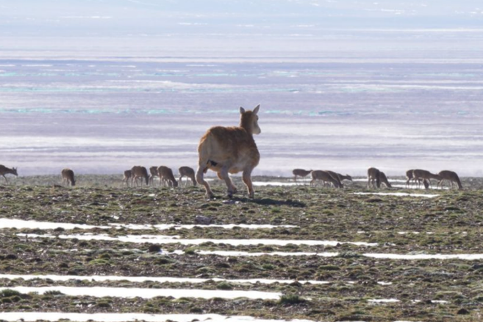
BEIJING – To the wolves of Tibet, China’s first “robot antelope” may look as appetising as the real herds that roam the rugged tundra. But the “creature” is part of Beijing’s growing surveillance that now even reaches into its most remote places. Its doe-like eyes and thick brown fur make the robotic ruminant nearly indistinguishable from the real antelope as the 5G- and AI-integrated imposter scans the Hoh Xil plateau with its sensors, footage from China’s state news agency Xinhua shows.

Developed by Xinhua, the Chinese Academy of Sciences and Hangzhou-based Deep Robotics, the robot antelope is equipped with 5G connectivity and artificial intelligence vision systems, enabling real-time monitoring of the migration, feeding and mating behaviours of the endangered species endemic to Tibet.

5G arrived in Tibet in 2019, according to Chinese government documents, and the south-western region reached 1 million users by 2022. With the completion of a 5G base station in the town of Gogmo in late 2023, every district in Tibet was covered, state media reported.

Beyond transmitting live images and tracking data on rare antelope species, Tibet’s 5G infrastructure now supports a growing range of AI applications, from small drones that can operate in areas impenetrable to radar, to telemedicine consultations and smart yak herding technologies, according to Chinese state media reports. China has invested heavily in Tibet, boosting the at times restive region’s role in President Xi Jinping’s flagship Belt and Road by strengthening its trade ties with Central Asia, while also tightening surveillance over its population and extending Beijing’s digital footprint towards neighbouring rival India. Analysts and human rights campaigners accuse Beijing of deploying “grey-zone” tactics against countries around the Tibetan plateau.

A July report from the Centre of Strategic and International Studies think tank documented instances of China leveraging local telecommunications networks to surveil dissidents living in neighbouring Nepal, alongside cases of cyber theft. REUTERS
China says Thai art show ‘distorts’ its policies on Tibet, Xinjiang, Hong Kong

Reuters

Tue, August 12, 2025 

EXCLUSIVE: Thai gallery removes China-focused artworks after ‘pressure’ from Beijing

EXCLUSIVE: Thai gallery removes China-focused artworks after ‘pressure’ from Beijing

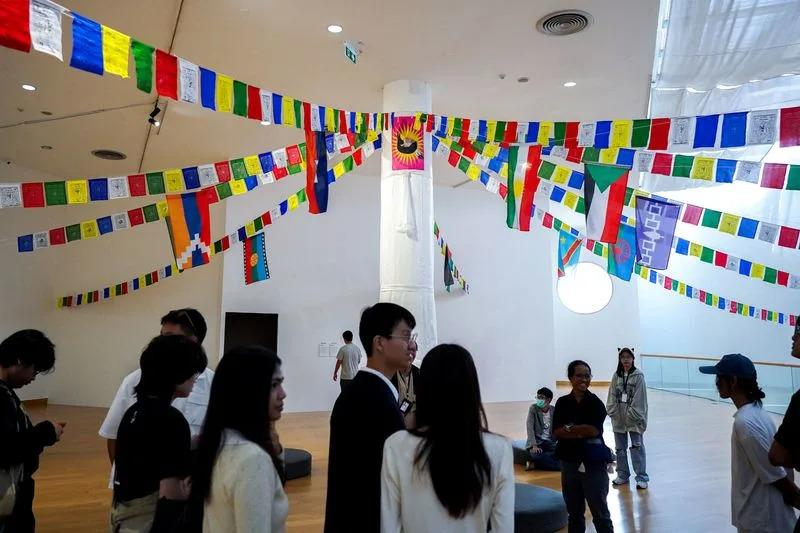
China accused the organisers of an exhibition in Thailand of promoting fallacies about its policies on Tibet, Xinjiang and Hong Kong after the show’s co-curator said artworks were removed or altered at Beijing’s request. As China builds influence in Southeast Asia, regional governments are treading cautiously as they balance cooperation with the world’s second biggest economy against concerns about political sovereignty.

Replying to Reuters’ queries about the exhibition, which opened in the Thai capital on July 24, the foreign ministry said on Monday it distorted Chinese policies and “undermined China’s core interests and political dignity”. It neither confirmed nor denied that the Chinese embassy was behind the removal and alteration.

“The fact that the relevant country took timely measures precisely shows that the promotion of the fallacies of ‘Tibetan independence’, ‘East Turkestan Islamic Movement’ and ‘Hong Kong independence’ has no market internationally and is unpopular,” it added.

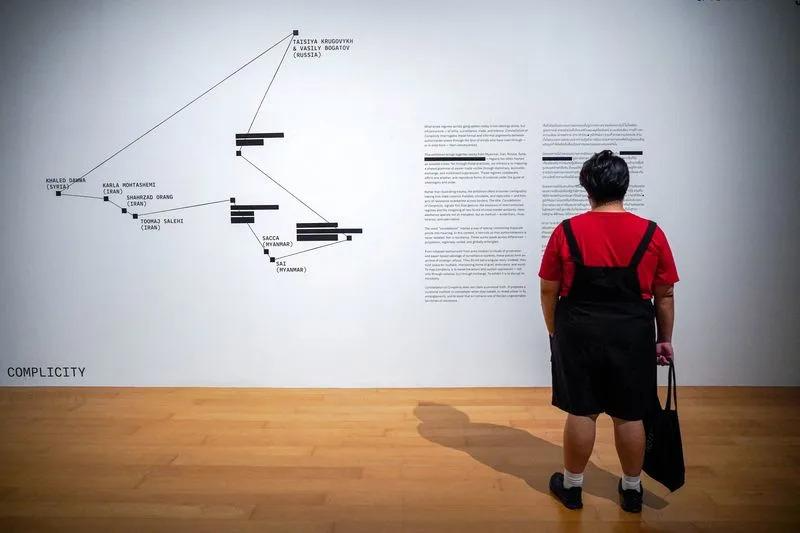
The gallery and Thailand’s foreign ministry did not respond to requests for comment. Bangkok Arts and Cultural Centre, one of Thailand’s top galleries, removed or altered artworks on Hong Kong as well as the Chinese government’s treatment of ethnic minorities in Tibet and Xinjiang at the request of the Chinese embassy.

The show, titled “Constellation of Complicity: Visualising the Global Machinery of Authoritarian Solidarity”, had a theme of authoritarian governments and featured works by artists in exile. Its co-curator, Sai, an artist from Myanmar who goes by one name, said China’s response showed it was “engaging in systematic political manipulation far beyond its borders”, such as in his own country, where Beijing backs the ruling military.

If the claims about ethnic minority causes were true, he said, there would have been no need to send officials “into galleries in Thailand, no need to black out artists’ names, and no need to threaten institutions into compliance.”

He added, “Censorship is never the weapon of those confident in the strength of their ideas.”

(Reporting by Ryan Woo; Writing by Yukun Zhang; Additional reporting by Poppy Mcpherson; Editing by Ed Osmond and Clarence Fernandez)